Creating the Ultimate Audio Experience for High School Football Fans

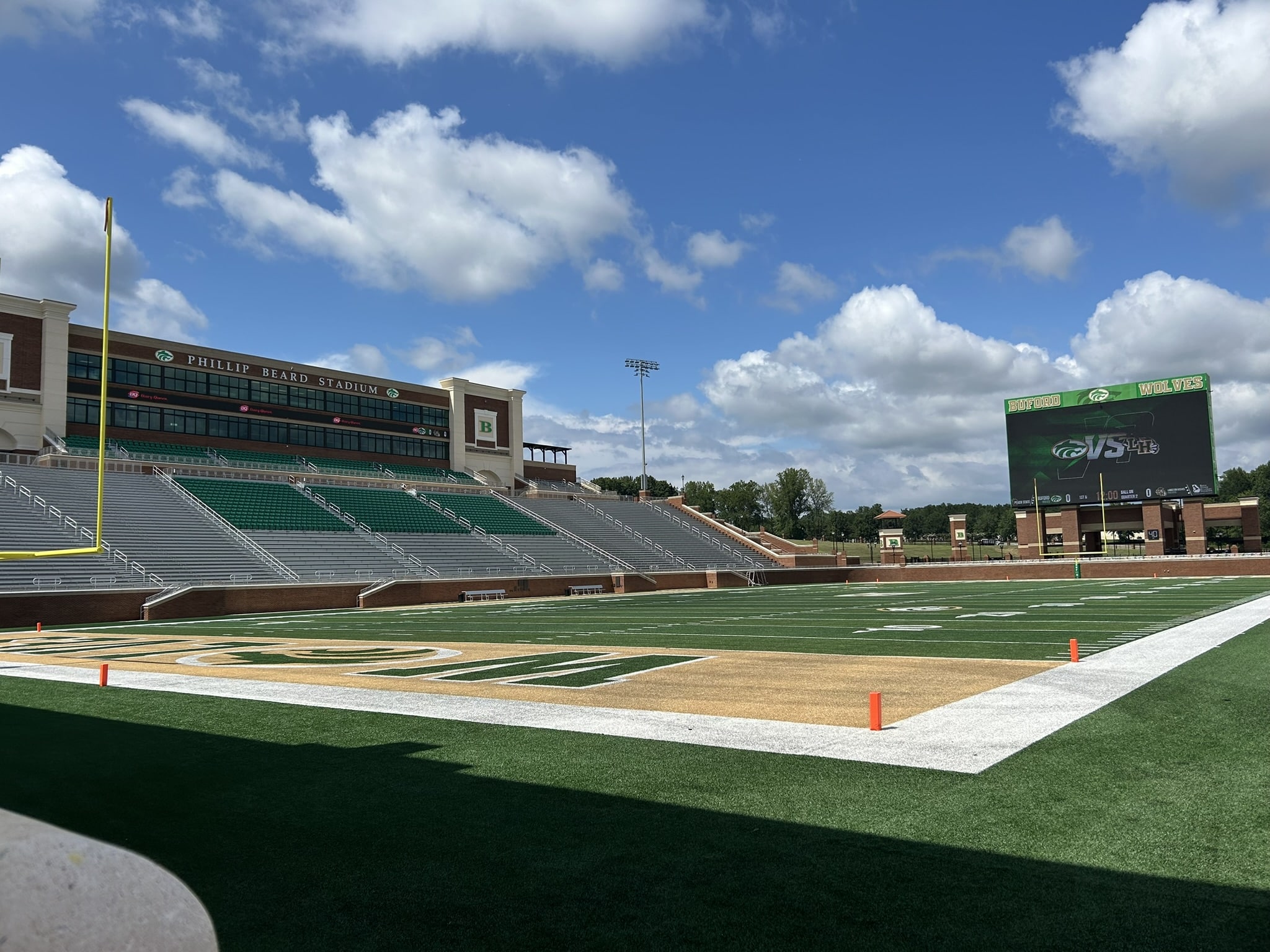
Buford Stadium

Danley has made a name for itself in athletics from high school basketball arenas and football fields to some of the most iconic NFL stadiums in the country. No matter the size or budget, our efforts in athletics remain the same: to deliver an amazing audio experience that excites a crowd, energizes the team, and communicates every play with crystal-clear clarity.

For athletic directors, coaches, and boosters who are trying to find their next audio solution, it can be difficult to sort through the clutter in pro audio. If you aren’t technically minded, there are a lot of offerings out there and frankly – not every loudspeaker company offers a great experience. In this brief guide, we’ve taken our years of experience to outline some of the things you need to consider in your audio system. Specifically, we’re focusing on the benefits of point source loudspeakers, the impact of powerful subwoofers, and the crucial role of high quality weatherproofing for your outdoor system. We’ll also share best practices in positioning and pattern control which are the hallmarks of a professional stadium audio design. Let’s get started.

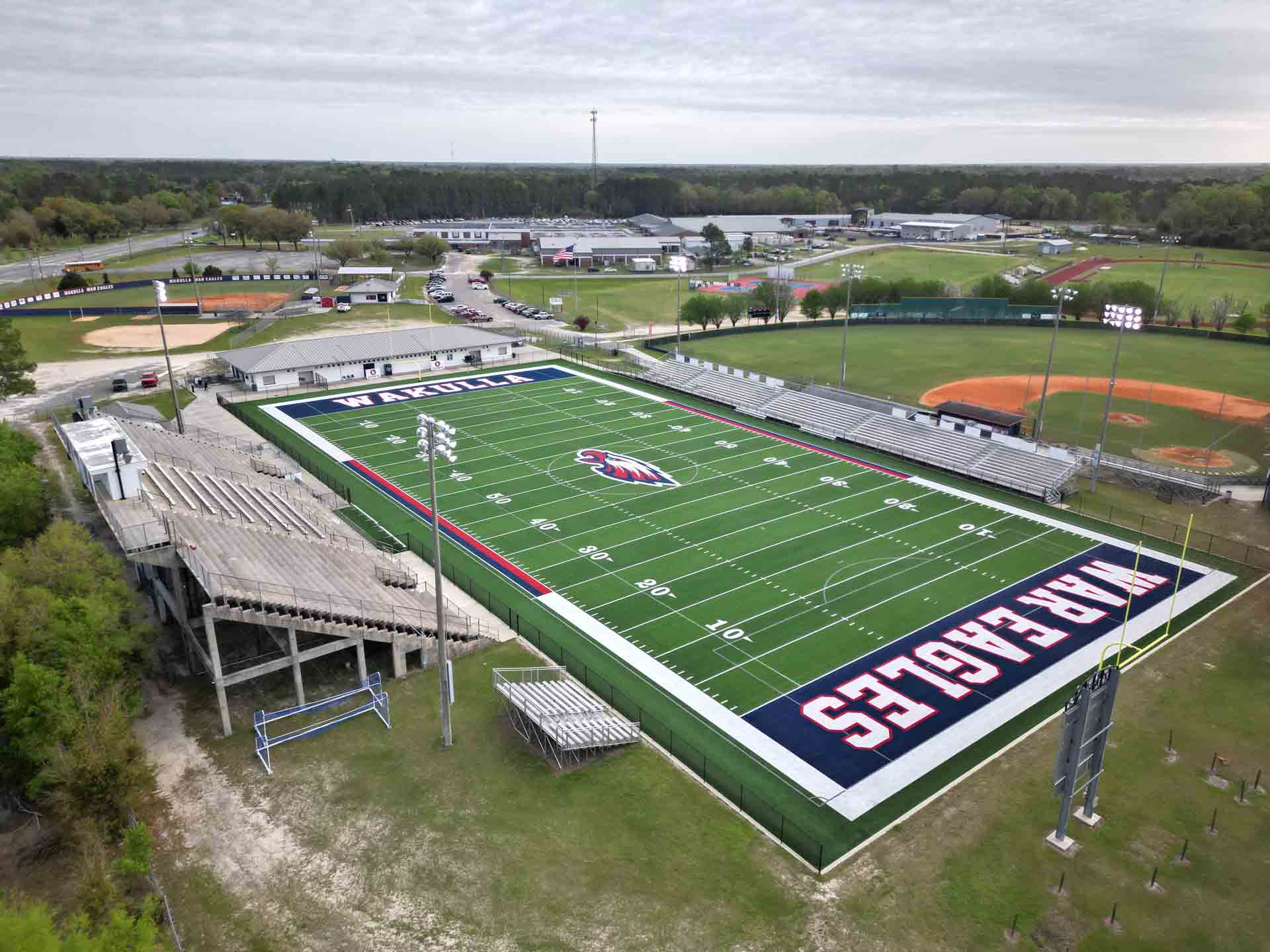
wakulla-hs

The Challenge of High School Football Stadium Audio

While NFL stadiums often have multi-million-dollar budgets and dedicated technical crews, not all high school football stadiums have that kind of support. Plus, indoor stadiums and outdoor stadiums face very different realities. For outdoor facilities and specifically those for high schools:

  • Limited budgets require the best possible performance per dollar spent
  • Open-air seating demands precise audio coverage over large areas
  • Weather exposure to rain, heat, cold, and wind creates issues
  • Multiple use cases where stadiums are used not just for football, but for other sports like soccer and lacrosse, pep rallies, marching band competitions, and graduation ceremonies
  • And, many times systems are managed by volunteers, not audio professionals.

All of this means that sound systems should be versatile, reliable, simple, and high-performing, even under challenging conditions. When it comes to delivering consistent sound to every seat, the solution often begins with point source loudspeakers.
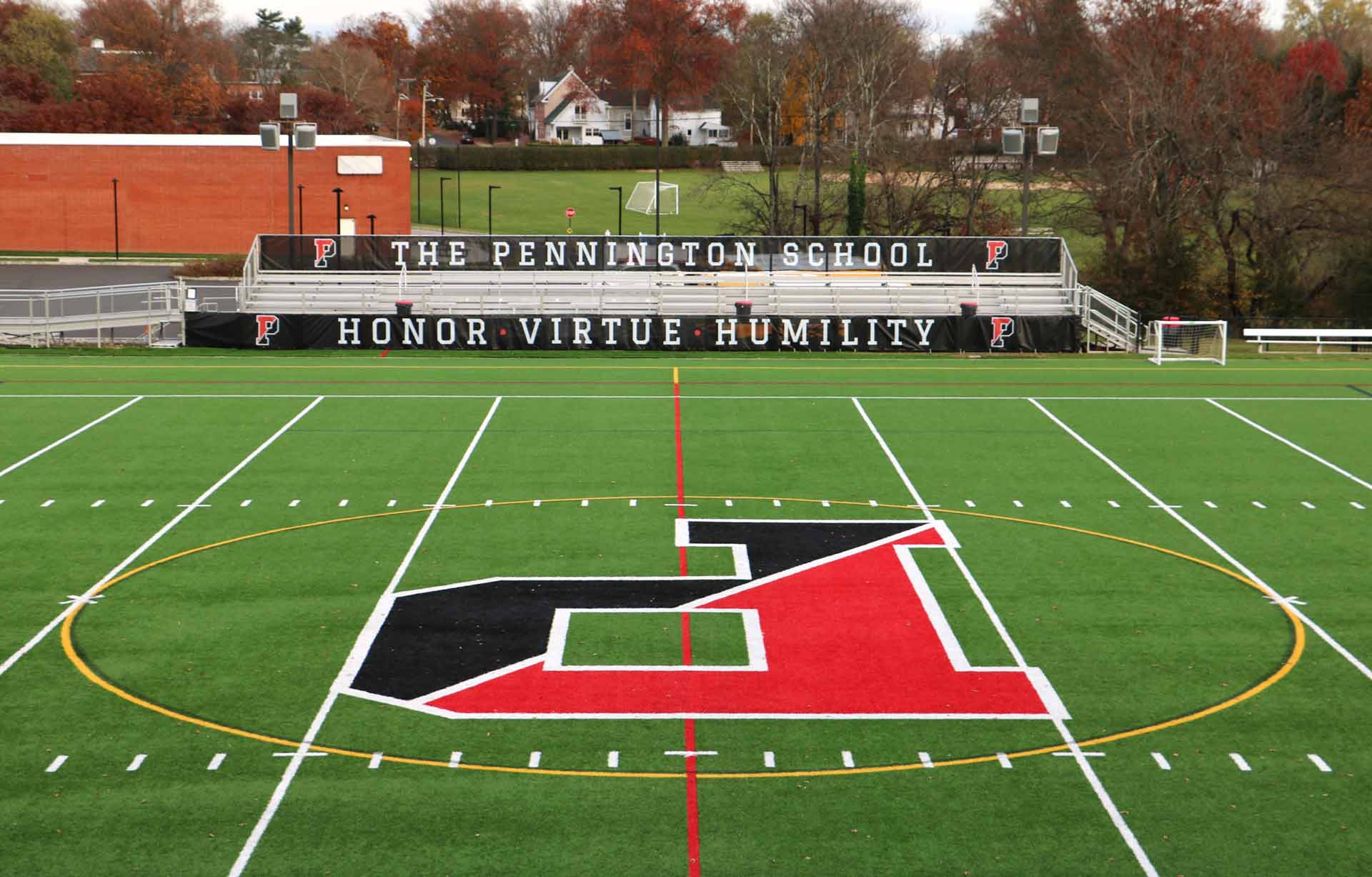
pennington-school-football-web

Why Point Source Loudspeakers are Ideal for Stadiums

Point source loudspeakers create sound from a single coherent source, allowing for excellent clarity and intelligibility across long distances. Unlike line arrays, which are designed for vertical coverage (think of a long hallway), point source systems offer excellent control in terms of pattern horizontally and vertically which excel in stadium environments where the audience is mostly horizontal.

Superior Speech Intelligibility

Football stadium audio isn’t just about music. The ability to clearly hear play calls, announcements, and emergency messages is just as critical. Point source loudspeakers provide phase-coherent sound, meaning the audience hears a more natural and understandable signal without the “smearing” effect that can happen when multiple sound sources arrive at different times. In simple terms, point source loudspeakers provide clarity.

Controlled Coverage

By selecting a loudspeaker with the right horn pattern (for example 60° x 40° or 90° x 40°), you can actually “aim” the sound exactly where it’s needed. When you hear audio pros talk about pattern control, this is what they’re referring to. Being wise in how we aim audio minimizes reflections off bleachers, press boxes, stands, and other structures. This is especially important in high school stadiums that have a lot of reflective surfaces (concrete, metal stands, brick, etc.) that can muddy the sound as it the sound waves bounce off these surfaces causing audio issues.

Fewer Speaker Locations

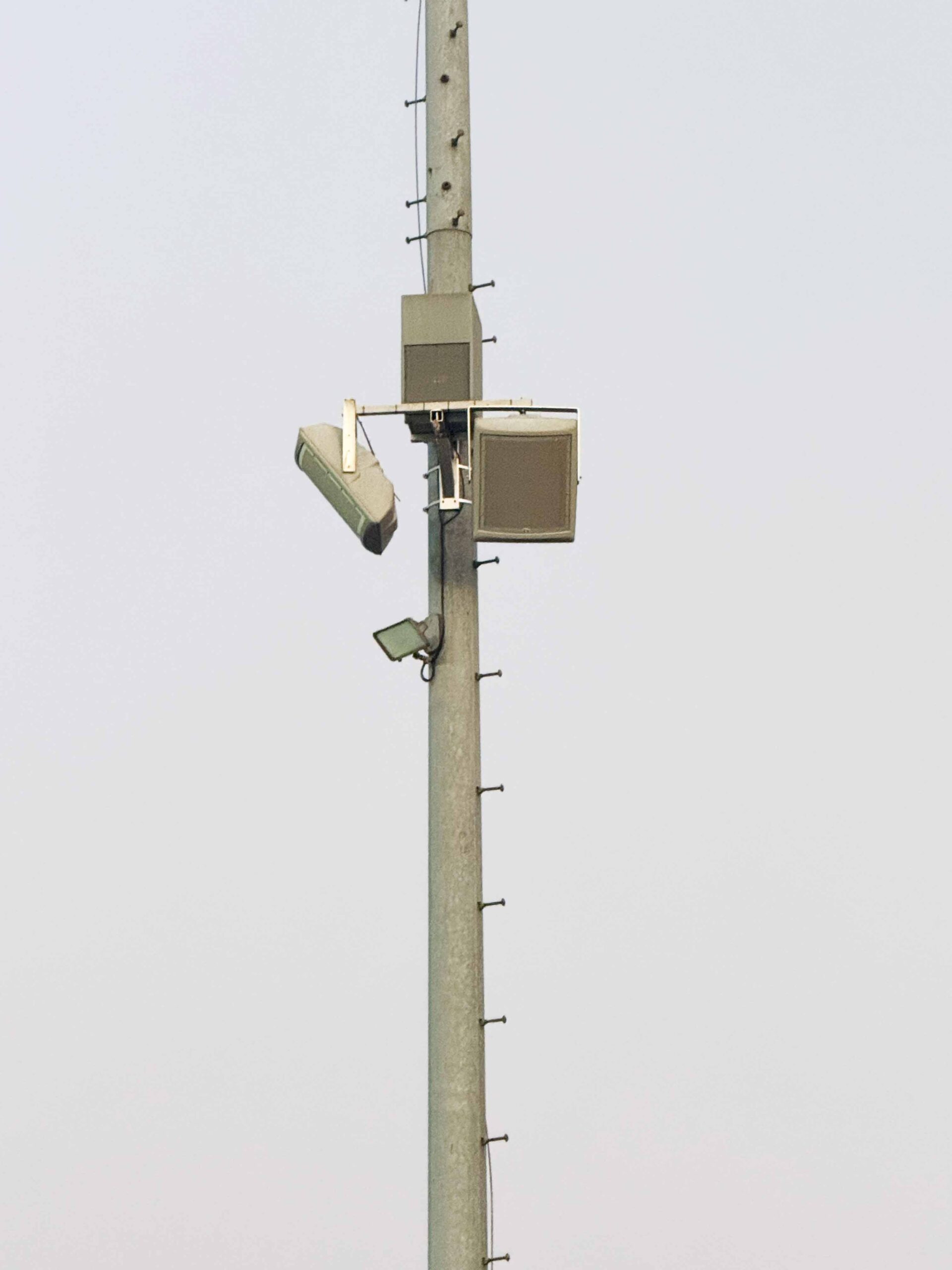
In many high school venues, a single cluster or a few well-positioned point source loudspeakers can provide complete coverage for the home stands, visitor stands, and field. This reduces complexity, installation costs, and long-term maintenance. Many times these loudspeakers can be placed on the press box, on select poles around the field, or even mounted above or near the facility’s scoreboard.

Buford Stadium

Positioning for Maximum Impact

No matter how advanced the loudspeaker, poor positioning can ruin its performance. Correct placement is about maximizing coverage and minimizing unwanted spill. The goal with any audio installation should be to ensure the audio stays aimed at fans, heard by players and coaches, and limit the audio that escapes into local neighborhoods.

The most effective position – if point source loudspeakers are clustered – is typically high and centered above the score board or press box, aimed toward the audience. This ensures sound travels evenly to all seating sections, reaching the farthest rows without blasting those closest to the location of the cluster.

Aiming is just as important as positioning. Using modeling software like Danley PRISM 3D or EASE, audio professionals can predict exactly how the sound will cover the seating area. This allows us to adjust angles and horn patterns so the perfect speaker is selected and that every seat get a consistent experience. Even considering fills (speakers that cover areas that the primary system does not) can ensure more even coverage so that there are no dead zones and the experience is consistent no matter the location.

If the visitor stands are far away, a separate, time-aligned point source loudspeaker or speakers may be needed to provide balanced sound without excessive delay or echo. Time alignment is achieved through the use of digital signal processing (DSP) ensuring that the sound from both sides arrives at the listener’s ears at the same time preventing awkward delay.

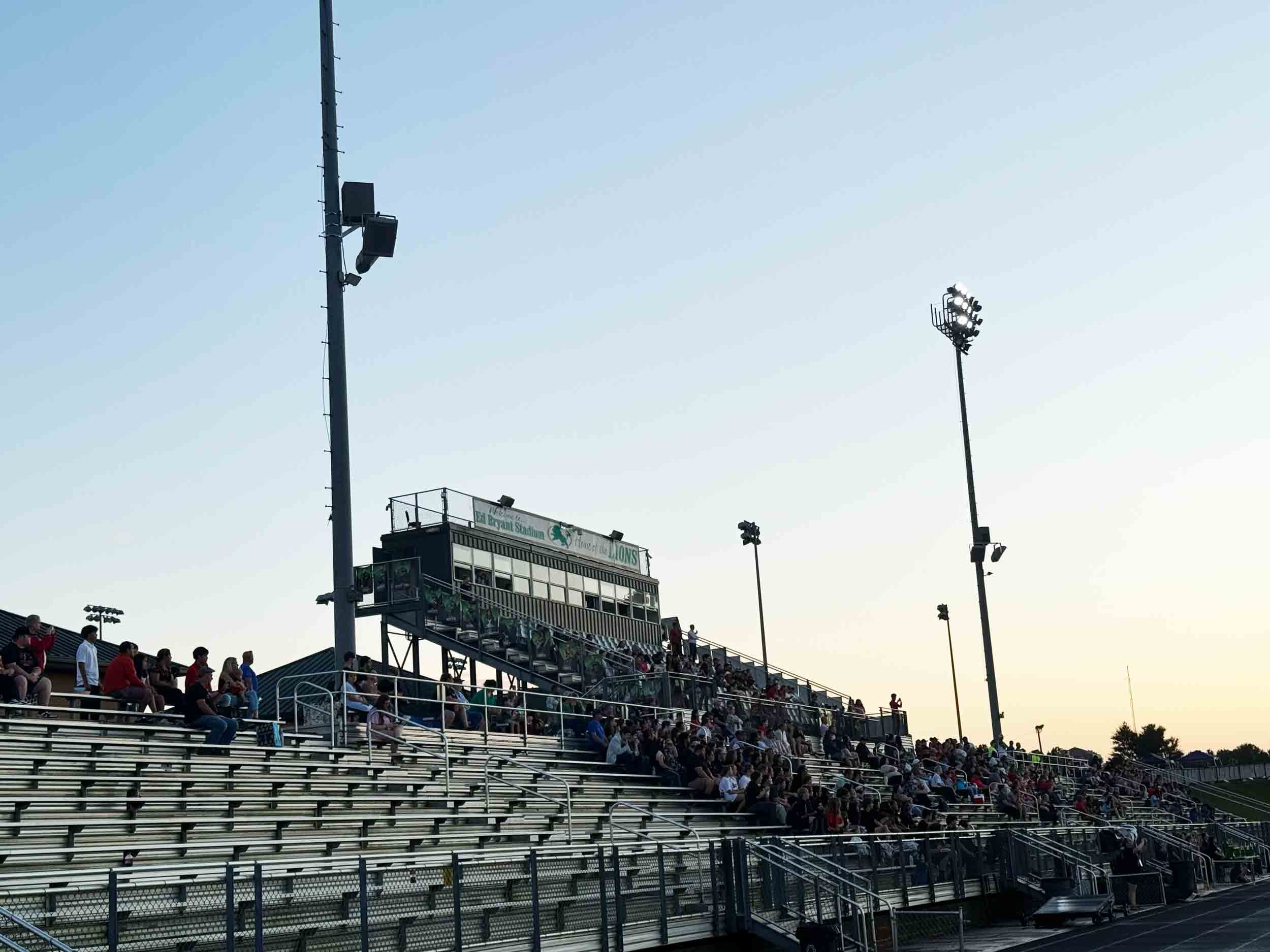
OS-HS

The Power of Subwoofers in Stadium Audio

While clarity is crucial for announcements, that low-frequency energy brings the impact. High school stadiums frequently overlook subwoofers and the impact they can have on the overall experience, but their inclusion can make all events real experiences.

Without subs, stadium systems sound thin and harsh as the high and mid frequencies of loudspeakers dominate your stadium’s sound. A properly integrated subwoofer system extends the frequency range, creating a full, balanced sound that’s pleasant for both music and speech.

Emotional Impact

Everyone knows the chest-pounding beats of pre-game hype. Subwoofers bring the physical energy and low-end to those experiences. This is what gets the crowd cheering and keeps them engaged.

Placement & Integration

Subwoofers can be flown with the main loudspeakers in a central cluster or ground-stacked under the stands to make sure fans “feel” the rumble of the low-end. In outdoor environments, placement of subwoofers can sometimes be tricky because of distance and issues with delay. However, DSP again plays a vital role in keeping low frequencies in time with the main system.

Pattern Control: Placing the Sound Where it Belongs

Pattern control in audio refers to shaping a loudspeaker’s output so that it covers the audience area precisely, without spilling too much sound into unwanted areas.

In a stadium, uncontrolled sound can cause:

Echoes from distant reflections

Noise complaints from nearby neighborhoods

Loss of intelligibility due to overlapping sound sources

Point source loudspeakers like those from Danley Sound Labs offer large-format horns and narrow coverage patterns that allow us to keep the energy focused in the right places. When combined with delays and fill speakers for far zones that are all in time-alignment thanks to quality DSP, the result is a seamless audio field with minimal waste and real impact.

Play Video
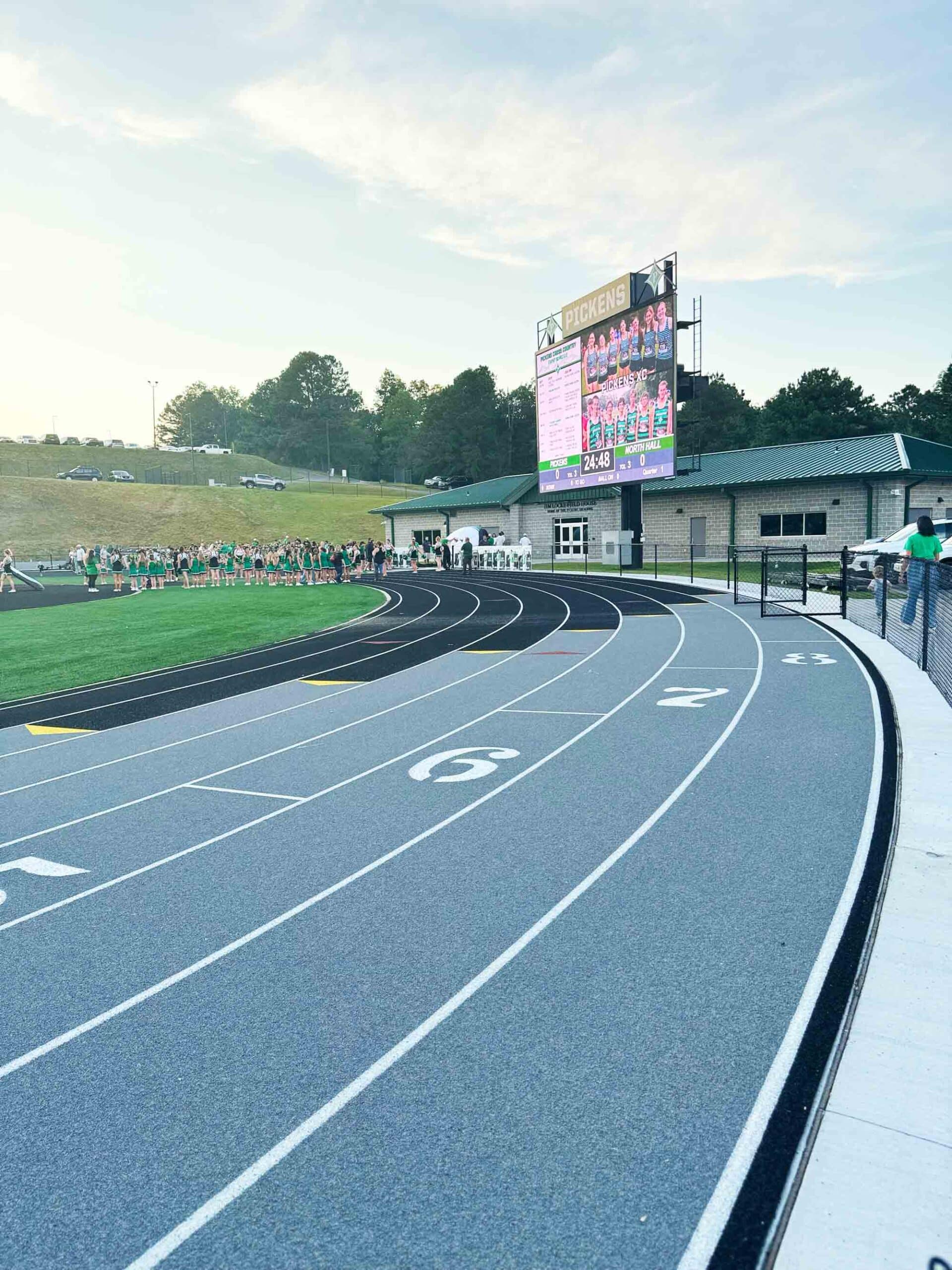
pickens

Considerations for any outdoor system include fiberglass-reinforced enclosures, stainless steel grilles, and UV-resistant coatings to prevent fading. But no system will survive without maintenance and periodic inspection.

Designing for the Experience

Creating an amazing audio experience in a high school football stadium is not just about equipment specs. It’s really about designing a system for the people in the stands. Every decision, from speaker choice, aiming, and placement, all should be made with the listener’s experience in mind. That means even coverage, minimal echo, and clarity.

Music needs full frequency range and dynamics. Speech needs maximum clarity. And, with the right DSP programming and setup, presets can be created to optimize for different types of events when needed – for football games, graduation, and more. Danley and its partners always work closely with the school’s AV staff, athletic staff, and band director to make sure the system meets the needs of all involved. This includes training on operation to ensure that they get the best performance out of the system every time.

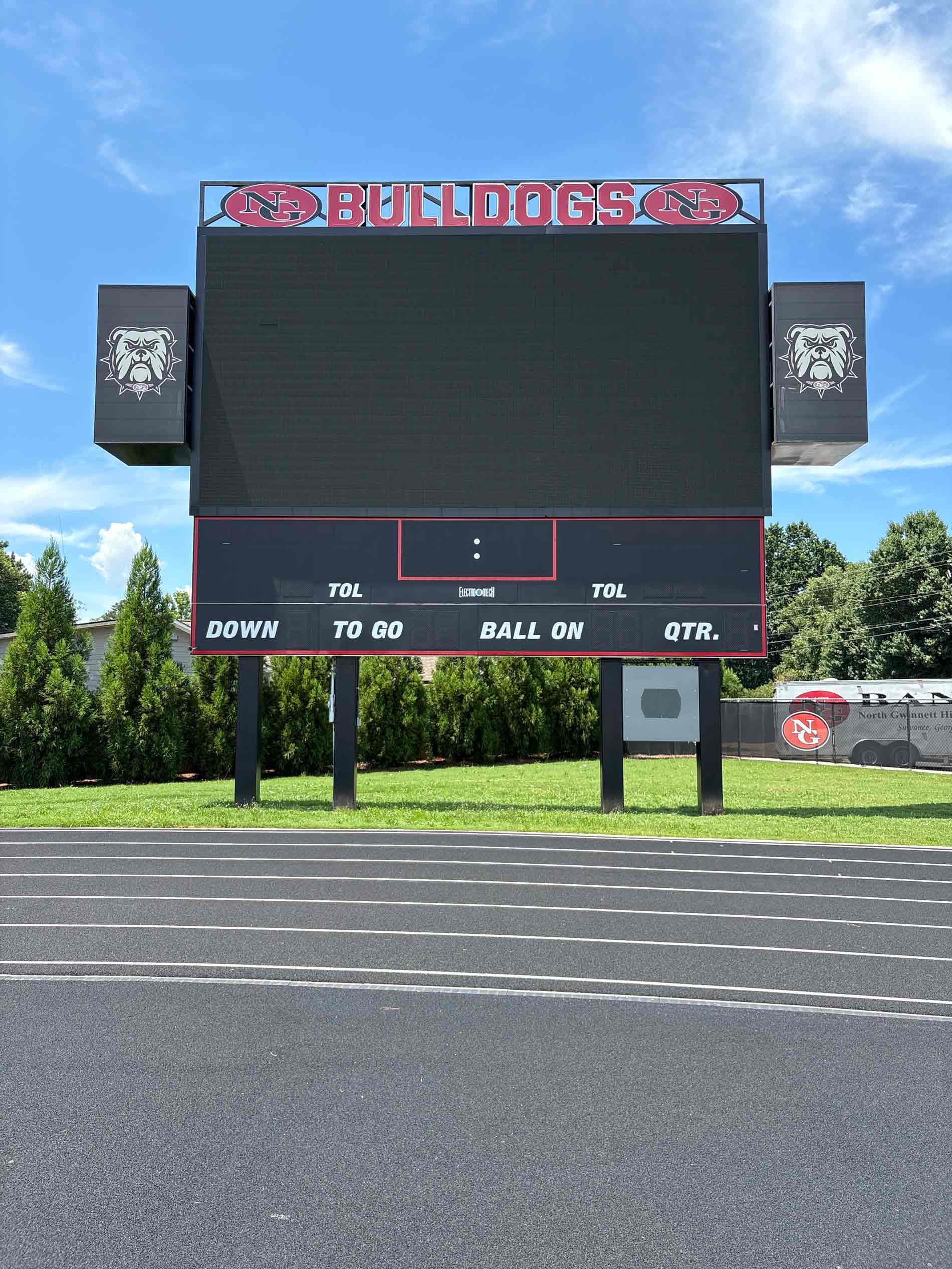
north-gwinnett-hs

Lessons from the Best

While I don’t know a lot about everything, I was blessed to work with the University of Alabama for a number of years. And there I learned a number of lessons that apply to creating the right atmosphere in any stadium:

  • Prioritize clarity first, power second. Now, Danley loudspeakers and subwoofers are POWERFUL with the right amplifiers and DSP. But, the brilliance in Danley’s products is in their clarity. You can always make a clear sound system louder, but you can’t make a loud system more clear.
  • Use modeling software. Guessing at coverage leads to uneven sound and poor experiences. Modeling with tools like Danley PRISM 3D ensures accuracy before installation.
  • Don’t skimp on subwoofers. Even a modest investment in low-end will change the energy in your stadium. While it may feel like another cost, it’s actually the cost that will bring the wow in your installation.
  • Plan for scalability. You want to choose a system that can be expanded or upgraded as your school grows. Don’t choose a system that can’t grow with you.
pickens-2

A Sample High School Stadium System

Every high school stadium is different. We’ve seen installs of some of our largest loudspeakers in high school stadiums with crystal-clear clarity and a TON of volume installed just this year. However, some schools don’t require the largest or loudest. We should always start with clarity.

For a typical 3,000-seat high school stadium, a Danley dealer may recommend:

  • High-output point source loudspeakers like the OS62 or OS80 built for the outdoors and mounted on the stadium’s press box;
  • Danley Extreme Weather-variant subwoofers like the BC415, THMini15, TH118XL, or otherwise for impactful low end;
  • One or two delay / fill speakers for far locations time-aligned with the main system;
  • Full DSP processing for EQ, delay, and preset recall;
  • And, Amplification using one of Danley’s powerful DNA or RNA amplifiers with network monitoring.

This simple configuration can ensure powerful, clear and consistent sound for every seat while all staying within a realistic budget for most high schools. Additional configurations, or larger configurations, can also be considered for schools that go big on experience and attendance.

Why Danley for Your Stadium Audio System

An amazing audio experience at a high school football stadium is achievable with the right combination of point source loudspeakers, powerful subwoofers, precision positioning, pattern control, and weatherproof construction. By applying the same design principles we use in major college and professional stadiums, scaled for budget of course, we can give every fan, player and announcer the clarity and excitement they deserve.

Great sound doesn’t just amplify the game; it can amplify a community. When the crowd hears every word, experiences every hit, and feels every beat, the stadium comes alive bringing that “12th man” to life. That’s the magic of professional audio done right.

Danley Sound Labs

Experience Danley in Person

Find a local distributor and schedule a live demo with one of our many experienced distributors and sound consultants.